Alternative to Interlinked Smoke Alarms
If you are a landlord, it is imperative to protect your tenants against the potential risks of fire and carbon monoxide poisoning.
Statistics show that tenants and individuals living in shared accommodation are seven times more likely to experience a fire.
Installing interlinked smoke detectors can be expensive and disruptive to your property, often requiring channeling, removal of floorboards, or the installation of unsightly plastic trunking. If you are unfamiliar with terms like ionization and optical, it can be confusing—leading to potential issues if your electrician is not well-informed.
This confusion can contribute to false alarms, detectors being covered, or even removed altogether by tenants.

Fortunately, there are interlinked smoke alarm systems available that simplify the choice and make the installation of fire systems much easier, without the disruption and mess associated with traditional wired systems. These systems utilize a technology called Thermoptek—the latest in optical sensing and thermal enhancement—providing a fast reaction to both slow and fast-burning fires.
These systems comply with current fire regulations and only need to be wired into the lighting circuit once on each floor, as the remaining detectors will link wirelessly using Wi-Safe 2 technology. Up to 50 detectors can be linked within one network.
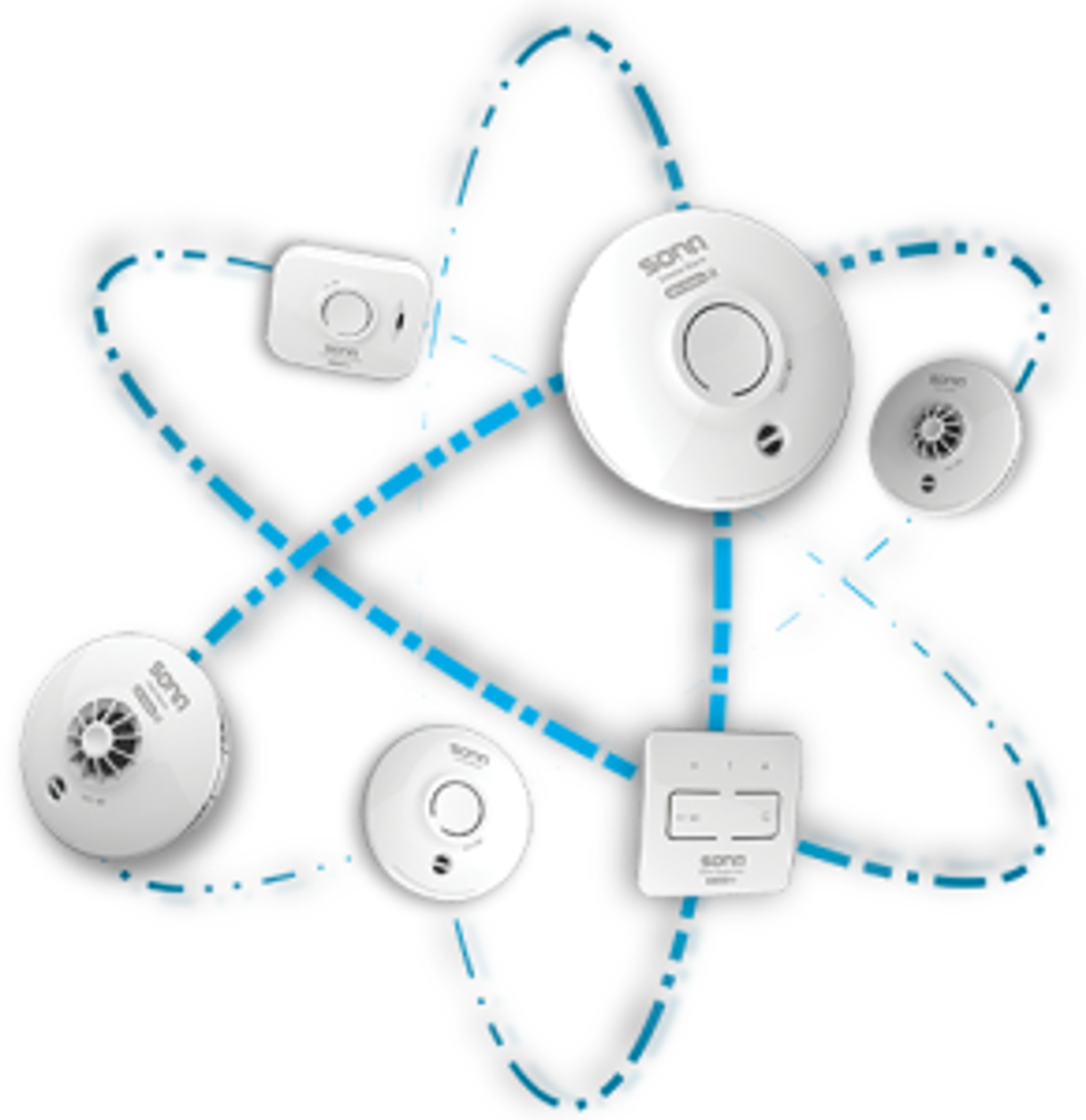
Each detector unit is equipped with a 10-year sealed-for-life battery, providing peace of mind that all alarms will function during a power cut and ensuring that even vacant properties are protected.
This technologically advanced interlinked smoke alarm system will also save on energy costs, as less power is required to operate them, leading to reduced energy bills.
Recommended Suppliers
Below are a couple of companies that provide this advanced technology:
- Sona Safety
- FireAngel Wi-Safe 2
Why Choose Thermoptek Technology?
Thermoptek technology offers several advantages:
- Fast response to both slow and fast-burning fires
- Reduced false alarms
- Minimal installation disruption
- Energy-efficient operation